Building your own solid wood bed frame can save you hundreds of dollars compared to retail options, with many DIY projects costing as little as $50-$100 for materials. This project allows for complete customization of dimensions, wood type, and finish, resulting in a durable and stylish bedroom centerpiece. Even novice woodworkers can construct a robust frame using budget-friendly materials like pine or spruce and straightforward joinery techniques such as pocket holes.
Understanding Your DIY Solid Wood Bed Frame Project
Embarking on a DIY bed frame project offers numerous benefits beyond just saving money. It provides an unparalleled opportunity for customization, allowing you to tailor every dimension, wood type, and finish to your exact preferences and bedroom aesthetics. A “solid wood” frame, unlike many mass-produced alternatives that rely on particle board or MDF, is constructed from natural lumber, offering superior durability, stability, and a timeless appeal. While the idea of building furniture might seem daunting, many bed frame designs are surprisingly straightforward, making them accessible even for novice woodworkers. The key is to approach the project systematically, understanding the basic components and the steps involved.
Common DIY Solid Wood Bed Frame Styles
When planning your bed frame, several popular styles lend themselves well to DIY construction, especially on a budget. Each offers distinct advantages in terms of aesthetics, build complexity, and functionality.
- Platform Bed Frames: These are arguably the most popular choice for DIYers due to their simplicity and modern aesthetic. A platform bed eliminates the need for a box spring, as it provides a solid or slatted surface directly for the mattress. This design often translates to fewer materials and simpler joinery, making it a budget-friendly option.
- Minimalist Bed Frames: Emphasizing clean lines and understated elegance, minimalist designs often use less material and focus on the inherent beauty of the wood. These frames are typically low-profile and can be incredibly sturdy without complex ornamentation, reducing both cost and build time.
- Storage Bed Frames: For those needing extra organization, integrating storage into your bed frame is a practical DIY solution. This can range from a raised platform design that allows for under-bed storage bins to more ambitious projects with built-in drawers. Many platform bed designs can be easily adapted to include open cubbies or even simple drawer systems, maximizing functionality in smaller spaces.
Comparing DIY Solid Wood Bed Frame Options
Choosing the right style depends on your needs, skill level, and desired aesthetic. Here’s a comparison to help you decide:
| Feature | Platform Bed Frame | Minimalist Bed Frame | Storage Bed Frame |
|---|---|---|---|
| Material Cost | Low | Low | Medium (more wood/hardware) |
| Build Difficulty | Beginner | Beginner | Intermediate |
| Tools Required | Basic power tools | Basic power tools | More specialized (e.g., drawer slides) |
| Durability Potential | High | High | High |
| Aesthetic | Modern, clean | Sleek, understated | Functional, efficient |
| Functionality | Mattress support | Mattress support | Mattress support, extra storage |
For a budget-conscious builder, platform and minimalist designs often provide the best entry point, while storage beds, though slightly more complex, offer significant functional benefits.
Factors to Consider When Planning Your DIY Bed Frame
|
Our Picks for the Best Bed Frame in 2026
As an Amazon Associate I earn from qualifying purchases.
|
||
| Num | Product | Action |
|---|---|---|
| 1 | 12 inches Full Size Bed Frame with Minimalist headboard,Metal Platform Base with Strong Metal Slats,Mattress Foundation for Under Bed Storage,Easy Assembly,Black |

|
| 2 | Zinus Rumi 14in Queen Metal Bed Frame, Quick Assembly SmartBase® Mattress Foundation, Heavy Duty Sturdy Steel with No Box Spring Needed, Eco-Friendly Packaging, Black |
|
| 3 | Metal Platform Bed Frame 14 Inch Tall,No Box Spring Needed,Twin Size Bed with Heavy Duty Strong Support Slats,Easy to Assemble,Black |
|
| 4 | Hafenpo 18 Inch Full Bed Frame - Sturdy Metal Platform Full Size, No Box Spring Needed, Heavy Duty, Easy Assembly, Strong Bearing Capacity, Under Bed Storage, Black |
|
| 5 | Full Size Bed Frame with Modern Headboard, Metal Platform Bed Base with Strong Support, No Box Spring Needed, Easy Assembly, Noise Free,Black |
|
| 6 | Queen Bed Frame-Classic Metal Platform Bed Frame,Mattress Foundation with Steel Slat Support,Under Foundation Storage,No Box Spring Needed, Easy Assembly, Queen Size |
|
| 7 | Metal Bed Frame,Twin Size Bed Frame with Storage Space,Heavy Duty Sturdy Mattress Foundation,Easy Assembly,No Box Spring Needed, Black,14 Inch,Twin |
|
| 8 | Zinus Rumi 14in Full Metal Bed Frame, Quick Assembly SmartBase® Mattress Foundation, Heavy Duty Sturdy Steel with No Box Spring Needed, Eco-Friendly Packaging, Black |
|
| 9 | Vengarus Metal Bed Frame,Full Size Bed Frame with Headboard,Structurally Stable, Heavy Duty Steel Slat Supported,Under Bed Storage,No Box Spring Needed,14 Inch,Black |
|
| 10 | Full Bed Frame with Classic Headboard,Strong Metal Slats Support,Under Bed Storage Space,No Box Spring Needed,Easy to Assemble,Black |
|
Before you pick up a single tool, thoughtful planning is essential for a successful and budget-friendly DIY bed frame.
- Mattress Size & Type: This is the most critical factor. Accurately measure your mattress (length, width, and thickness) to ensure your frame will fit perfectly. Also, consider the mattress type; some foam mattresses require closer slat spacing for optimal support.
- Bedroom Space & Layout: Think about the bed’s footprint in your room. Do you have space for a large headboard or a wider frame with integrated side tables? Consider the height as well – a lower profile can make a room feel larger, while a higher frame offers more under-bed storage potential.
- Interior Style: Your bed frame should complement your existing decor. A rustic farmhouse look might call for visible knots and a natural stain, while a modern minimalist room could benefit from clean lines and a painted finish.
- Your Budget: Clearly define how much you’re willing to spend. This will heavily influence your wood choices, joinery methods, and the complexity of your design. to factor in not just lumber but also fasteners, glue, sandpaper, and finish.
- Skill Level & Available Tools: Be realistic about your woodworking experience. Simpler designs using pocket holes or screws are ideal for beginners, while more intricate joinery may require advanced tools and techniques. Assess the tools you already own and what you might need to borrow or purchase.
- Wood Selection: For a budget-friendly solid wood bed frame, softwoods are your best bet. Pine, spruce, and common whitewood or fir framing lumber are affordable, widely available, and relatively easy to work with. While oak offers superior durability and a rich grain, its higher cost might push it beyond a tight budget.
A Step-by-Step DIY Bed Frame Building Guide
Building your own solid wood bed frame is a series of manageable steps. Following this guide will help ensure a sturdy and satisfying result.
- Planning & Design: Start with sketches. Draw your bed frame from different angles, noting all dimensions. Accurately measure your mattress and decide on the desired height of your frame. Create a detailed cut list for every piece of wood you’ll need, including lengths and widths. This step is crucial for minimizing waste and avoiding costly mistakes.
- Material Selection & Sourcing: As mentioned, pine, spruce, or common whitewood/fir framing lumber are excellent budget choices for a solid wood bed frame. When sourcing your lumber, inspect each board carefully. Look down the edges for signs of bowing, twisting, or cupping. Check for excessive knots, large cracks, or other surface damage that could compromise the frame’s integrity [cite: 1, 3 (search result 3 for “simple joinery”)]. Buying from a local lumberyard might offer better quality and variety than big box stores.
- Essential Tools: While experienced woodworkers might opt for complex joinery, beginners can achieve a sturdy frame with basic power tools. You’ll definitely need:
- Measuring Tape and Pencil: For precise markings.
- Speed Square or Framing Square: To ensure accurate cuts and angles.
- Circular Saw or Miter Saw: For cutting lumber to length. A miter saw offers more precision for repeatable cuts.
- Electric Drill/Driver: For drilling pilot holes and driving screws.
- Clamps: Essential for holding pieces together during glue-ups and assembly. Don’t underestimate their importance.
- Sander (orbital or block): For smoothing rough edges and preparing for finishing.
- Pocket Hole Jig: Highly recommended for beginners, a Kreg R3 or similar jig makes strong, simple joints with ease [cite: 1 (search result 1 for “best cheap wood”)].
- Cutting Your Lumber: Accuracy here is paramount. Use your detailed cut list and double-check every measurement before making a cut. A well-tuned saw and sharp blade will give cleaner results.
- Joinery Methods for Beginners:
- Pocket Hole Joinery: This is often the simplest and strongest method for DIY bed frames. Use your pocket hole jig to drill angled holes into one piece of wood, then connect it to another with pocket hole screws and wood glue [cite: 1, 2, 3 (search result 1 for “DIY solid wood”), 1, 3 (search result 3 for “simple joinery”)]. Clamps are crucial here to hold pieces flush while securing them.
- Butt Joints with Screws & Glue: For less load-bearing areas, or if you prefer a simpler approach, you can butt two pieces of wood together, apply wood glue, and then drive screws through one piece into the end grain of the other. Pre-drilling pilot holes is vital to prevent splitting.
- Dowel Joints (Optional): If you desire a cleaner look with hidden fasteners, dowel joints are an option. They require precise marking and drilling to align the dowel holes on both mating pieces [cite: 2 (search result 2 for “simple joinery”)].
- Assembly: Typically, you’ll assemble the headboard and footboard sections first, then attach the long side rails. Ensure all corners are square as you go. Add a strong center support rail (for queen, king, and sometimes full-sized beds) and any necessary support legs.
- Installing Slats: For optimal mattress support and ventilation, evenly spaced wooden slats (often 1x4s or 1x6s) are a common and effective choice [cite: 2, 3 (search result 1 for “DIY solid wood”), 4 (search result 4 for “simple joinery”)]. For memory foam mattresses, slats should be no more than 2-3 inches apart. Attach small ledgers along the inside of your side rails for the slats to rest on, then secure the slats with screws or small brad nails to prevent shifting.
- Sanding & Finishing: This step elevates your project from raw wood to a finished piece of furniture. Sand all surfaces smooth, starting with a coarser grit (e.g., 100-120) and progressing to a finer one (e.g., 180-220). Remove all dust before applying your chosen finish. Options include stain (to enhance wood grain), paint (for a custom color), or a clear protective coat like polyurethane (to seal and protect the wood).
Budgeting Your DIY Solid Wood Bed Frame Project
One of the most appealing aspects of a DIY bed frame is the potential for significant cost savings. Here’s how to manage your budget effectively:
- Material Costs Breakdown:
- Lumber: This will be your largest expense. Opt for construction-grade pine, spruce, or whitewood. Prices vary, but a full queen-sized platform bed can often be built with around $50-$150 worth of framing lumber and slats.
- Fasteners: Wood screws (pocket hole screws if using a jig), wood glue.
- Sandpaper & Finish: Varnish, stain, or paint.
- Tool Investment: If you’re starting from scratch, a basic circular saw, drill, and pocket hole jig might cost around $100-$200. However, these are versatile tools you’ll use for many future projects. Consider borrowing tools from friends or renting for one-off tasks.
- Cost-Saving Strategies:
- Simplify Your Design: The less complex the design, the less material and time it will require.
- Utilize Construction Lumber: 2x4s and 2x6s are incredibly strong and much cheaper than furniture-grade hardwoods.
- Reclaimed Wood: Check local salvage yards or online marketplaces for inexpensive or free reclaimed wood, but be prepared for extra work like de-nailing and cleaning.
- DIY Finish: Applying your own stain or paint is far cheaper than professional finishing.
- Minimalist Slats: If your mattress allows, you might use fewer slats or even a single sheet of plywood for support, reducing material costs [cite: 1 (search result 1 for “DIY platform storage”)].
- Real-World Examples: Many DIYers report building sturdy, attractive bed frames for as little as $50-$100 for all materials, demonstrating the substantial savings compared to retail prices [cite: 2 (search result 2 for “DIY platform bed frame with storage”)].
Popular Budget-Friendly DIY Bed Frame Designs
With a focus on solid wood and affordability, here are a few designs that consistently prove popular among DIY builders.
- The Simple Platform Bed: This design typically consists of a sturdy rectangular frame with a center support and evenly spaced wooden slats. Its clean lines and low profile make it a versatile choice for almost any decor. It’s an ideal starter project due to its minimal number of cuts and straightforward assembly, often relying heavily on pocket hole joinery for quick and strong connections.
- Platform with Integrated Under-Bed Storage: Building on the simple platform concept, this design raises the bed slightly higher to accommodate storage solutions. This can involve creating open cubbies along the sides or ends for baskets and bins, or even integrating simple drawer boxes directly into the frame [cite: 1, 2, 3, 4, 5 (search results for “DIY platform bed frame with storage”)]. This is perfect for maximizing space in smaller bedrooms, providing a practical and aesthetically pleasing storage solution.
- Minimalist Floating Bed Look: Achieve a sophisticated “floating” effect by recessing the support legs inward from the main frame. This creates the illusion that the bed is hovering above the floor. While slightly more advanced in its visual trickery, the underlying construction can still be very simple, often using robust lumber for the main frame and smaller, hidden supports. This design elevates the room’s aesthetic without significantly increasing material costs.
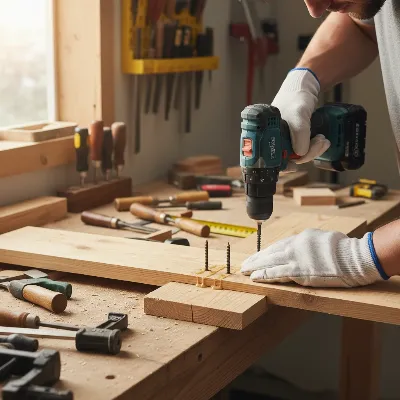 A person is actively building a solid wood bed frame, focusing on a robust joint with a drill and screws. The scene is set in a well-lit home workshop, with wood shavings and other tools visible on a workbench in the background. The lighting is bright and natural, emphasizing the texture of the unfinished pine wood. The style is realistic and instructional.
Building your own solid wood bed frame offers a unique blend of personal satisfaction, cost savings, and the creation of a truly bespoke piece of furniture. By carefully selecting budget-friendly materials like pine or spruce, employing straightforward joinery techniques such as pocket holes, and following a methodical approach, even a novice woodworker can construct a durable and beautiful bed frame. From simple platform designs to those with integrated storage, the possibilities are vast, allowing you to tailor your bed to your exact needs and aesthetic preferences. This DIY journey not only provides a high-quality foundation for your sleep but also equips you with valuable skills and a profound sense of accomplishment.
Are you ready to improve your bedroom and improve your sleep experience with a handcrafted solid wood bed frame?
Frequently Asked Questions
Frequently Asked Questions
What is the cheapest wood to build a bed frame?
Pine, spruce, and common framing lumber such as whitewood or fir are generally the most affordable options for a DIY bed frame. These woods are widely available, easy to work with, and cost significantly less than hardwoods like oak.
How long does it take to build a DIY bed frame?
For a novice, a simple platform bed frame can typically be built in a few hours to a weekend. The total time depends on the complexity of the design, the builder's skill level, and the tools available for the project.
Do I need special tools to build a wood bed frame?
While basic hand tools can suffice for the simplest designs, an electric drill, a circular saw, and a pocket hole jig (like a Kreg jig) are highly recommended. These tools significantly speed up the process and improve the precision and sturdiness of a DIY bed frame.
Can a DIY bed frame be as sturdy as a store-bought one?
Yes, a DIY solid wood bed frame can be exceptionally sturdy and durable, often surpassing the quality of mass-produced furniture. This is achieved through proper design, careful wood selection, and strong joinery techniques such as pocket holes, screws with wood glue, or half-lap joints.
What type of mattress support is best for a DIY bed frame?
Evenly spaced wooden slats, typically made from 1x4s or 1x6s, are a common and highly effective choice for mattress support. They provide excellent ventilation and support for most mattresses, especially when combined with a robust center support beam for larger bed sizes.
How much money can I save by building my own bed frame?
Building your own bed frame can lead to substantial savings. Many DIY projects for solid wood bed frames cost as little as $50-$100 for materials, representing significant savings compared to retail options that can cost hundreds or even thousands of dollars.
Build a Solid Wood Bed Frame
Learn how to construct a durable and stylish solid wood bed frame on a budget using common tools and materials.
Start by sketching your bed frame from various angles, noting all dimensions. Accurately measure your mattress and decide on the desired frame height. Create a detailed cut list for every piece of wood needed to minimize waste and avoid mistakes.
Choose budget-friendly softwoods like pine, spruce, or common whitewood/fir framing lumber. Inspect each board carefully for bowing, twisting, or large knots. Purchasing from a local lumberyard can offer better quality and variety than big box stores.
For beginners, essential tools include a measuring tape, pencil, speed square, circular or miter saw, electric drill/driver, clamps, sander, and a pocket hole jig. These tools will ensure precise cuts and strong joints for your bed frame.
Use your detailed cut list and double-check all measurements before cutting lumber. Employ pocket hole joinery with screws and wood glue for strong connections, especially for beginners. Assemble the headboard and footboard sections first, ensuring all corners are square.
Attach evenly spaced wooden slats (1x4s or 1x6s) to ledgers along the inside of your side rails for mattress support and ventilation. Sand all surfaces smooth, starting with coarser grit and progressing to finer. Apply your chosen finish, such as stain, paint, or a clear protective coat.

I’ve always wanted a really durable bed frame, and the idea of avoiding particle board was a huge selling point for me. I customized the dimensions to fit a tricky corner in my bedroom perfectly. The finished product feels incredibly solid and looks much more expensive than the materials cost. It was a fun weekend project!
I was so intimidated by the idea of building my own bed frame, but this guide made it seem totally doable. I ended up using pine for my project, and it looks fantastic in my guest room. The instructions for pocket holes were super clear, and I saved a ton of money compared to buying something similar. Highly recommend giving this a try if you’re on the fence!
This DIY guide is excellent! I’ve done a few woodworking projects before, but never a bed frame. The tips on choosing wood types like spruce were helpful, and I appreciated the emphasis on straightforward joinery. My new bed frame is incredibly robust and exactly what I envisioned for my master bedroom. It’s a truly rewarding project.
The idea of saving money by building a solid wood bed frame for $50-$100 was appealing, but I found the material costs for decent quality wood to be a bit higher than expected in my area. The customization aspect is great, and I did get a unique piece, but it took me longer than I thought it would. Still, it’s sturdy.