A velvet upholstered bed frame brings an undeniable touch of luxury and sophistication to any bedroom. Its soft, rich texture invites comfort and style, instantly elevating the aesthetic. However, owning such an exquisite piece comes with the responsibility of maintaining its pristine condition, especially when it comes to cleaning. The delicate nature of velvet, particularly its pile and vibrant color, makes proper cleaning a crucial task to avoid unsightly fading or damage. This comprehensive guide will walk you through effective, fade-safe methods to keep your velvet bed frame looking as opulent as the day you bought it, ensuring its beauty endures for years to come.
Understanding Velvet Upholstery
Velvet is renowned for its unique soft pile, created by evenly cut fibers. This characteristic surface is what gives velvet its distinct sheen and luxurious feel. However, it also makes the fabric susceptible to crushing, flattening, and trapping dust, which can dull its appearance over time. When cleaning, the primary challenge is to remove dirt and stains without disturbing the pile, causing watermarks, or, most critically, stripping the color and leading to fading. Understanding these nuances is the first step toward effective and safe maintenance.
Essential Regular Maintenance for Your Velvet Bed Frame
Consistent routine care is paramount to extending the life and beauty of your velvet bed frame and preventing the build-up of dirt that can lead to deeper stains and the need for more intensive cleaning.
The simplest yet most effective routine involves regular dusting and vacuuming. Aim to lightly vacuum your velvet bed frame at least once a week. Use a vacuum cleaner equipped with an upholstery attachment set to a low suction power. Gently glide the attachment over the entire surface, moving in the direction of the velvet’s pile. This action effectively lifts away loose dust, lint, and pet hair without damaging the delicate fibers. Alternatively, a soft-bristled clothes brush can be used to gently sweep away surface debris, again, following the nap of the fabric.
Beyond cleaning, regular brushing also helps to maintain the velvet’s natural texture and prevents the pile from becoming matted or flattened. After vacuuming or in between, a gentle brush can revive the fabric’s plushness, keeping it looking fresh and vibrant. This proactive approach significantly reduces the chances of ingrained dirt affecting the fabric’s color and overall quality.
Tackling Spills and Stains: Spot Cleaning Techniques
Despite regular maintenance, accidents happen. When spills occur on your velvet upholstered bed frame, immediate action is your best defense against permanent stains and potential fading. The key principle for any spot cleaning is to blot, not rub. Rubbing can push the stain deeper into the fabric, spread it, and damage the velvet pile, making the problem worse.
For most fresh spills, start by gently blotting the affected area with a clean, dry, lint-free cloth or paper towel to absorb as much liquid as possible. If a stain remains, you can use a slightly damp cloth with tepid warm water. Lightly spray or dab the water onto the stain, being careful not to oversaturate the fabric. Follow by blotting with a dry cloth.
For more stubborn general stains, a mild cleaning solution can be effective. Mix a small amount of mild dish soap (such as one used for handwashing dishes) with warm water. Dampen a clean, lint-free cloth with this solution, wring it out thoroughly so it’s just barely damp, and then gently dab the stain. Always work from the outer edges of the stain towards its center to prevent it from spreading. Once the stain is lifted, use a separate cloth dampened with plain water to blot and remove any soap residue. Afterward, blot thoroughly with a dry cloth. Some sources also suggest using antibacterial surface wipes (without bleach) or even hand sanitizer wipes for tough spots, but a patch test in an inconspicuous area is absolutely essential before applying any product to a visible spot.
For oil or grease stains, a different approach is required. Sprinkle a small amount of talcum powder or cornstarch directly onto the fresh stain. These powders will help absorb the oil. Let it sit for several hours, or even overnight, to fully draw out the grease. Afterward, gently brush off the powder with a soft brush or vacuum it away with an upholstery attachment. Repeat if necessary.
Regardless of the cleaning solution you choose, always perform a patch test on an unseen area of your bed frame (like the back or underside) first. This step is critical to ensure the product does not cause discoloration or fading of your velvet fabric. After cleaning, allow the area to air dry completely. Never use a hairdryer or other direct heat sources, as this can permanently alter the velvet’s texture and lead to watermarks or even fading.
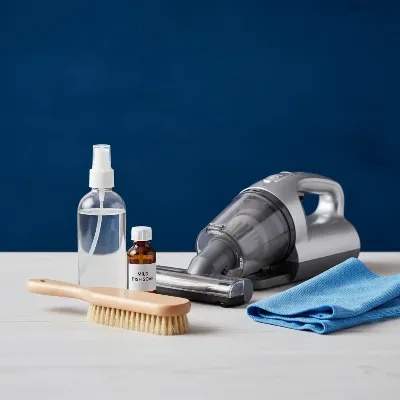 Essential velvet bed frame cleaning kit: soft brush, vacuum attachment, cleaning solutions.
Deep Cleaning Your Velvet Bed Frame Safely
While spot cleaning handles most issues, an occasional deep clean can rejuvenate your velvet bed frame and address accumulated grime or more widespread dullness. Steam cleaning is often cited as an effective and safe method for a deeper clean without the risk of oversaturation or harsh chemicals.
When steam cleaning, use a handheld steamer designed for upholstery, and ideally one with a delicate fabric attachment. Before applying steam to the entire bed frame, test it on an inconspicuous area. Hold the steamer at a safe distance from the velvet, typically at arm’s length, to avoid saturating the fabric. Move the steamer gently and evenly across the surface, in the direction of the pile. The steam helps to lift dirt and refresh the fibers without the need for harsh detergents. As you steam, you can gently use your hand or a soft brush to help smooth the fibers back into place and revive the pile. Do not over-steam any single area, as too much moisture can still cause issues. After steaming, ensure the fabric air dries completely.
For very extensive or deeply set stains, or if you are unsure about DIY deep cleaning, considering professional cleaning services is always a wise choice. Professionals have specialized equipment and expertise in handling delicate fabrics like velvet, ensuring a thorough clean without risking damage or fading. This can be a worthwhile investment to protect your luxurious bed frame.
Preventing Fading and Damage: Key Precautions
Preventing fading is just as important as cleaning your velvet bed frame. The vibrant color of velvet can be surprisingly delicate when exposed to certain elements.
One of the most significant culprits for color fading is direct sunlight. Prolonged exposure to UV rays can cause the dyes in velvet to break down, leading to irreversible fading, especially on darker colors. To protect your bed frame, position it away from windows that receive direct sunlight. If this isn’t possible, use curtains, blinds, or even UV-protective window films to shield the fabric during peak sun hours.
Another crucial precaution is to steer clear of harsh chemicals. Bleach, strong detergents, abrasive cleaners, and solvents can strip the color from velvet, damage its fibers, and leave permanent marks. Always opt for mild, pH-neutral cleaners or specialized velvet upholstery cleaners, and always, always perform a patch test first.
Finally, avoid oversaturating the fabric with water or cleaning solutions. Excess moisture can lead to watermarks, alter the velvet’s texture, and potentially contribute to color bleeding or fading if the dyes are not colorfast. Use liquids sparingly and ensure thorough drying. Always check the manufacturer’s care instructions, usually found on a tag, as they provide specific guidance tailored to your bed frame’s velvet type.
Choosing the Right Cleaning Products and Tools
Having the correct tools and products on hand makes cleaning your velvet bed frame much easier and safer.
- Vacuum cleaner with an upholstery attachment: Essential for regular dust and lint removal.
- Soft-bristled brush or clothes brush: Ideal for gently sweeping away debris and reviving the pile.
- Lint-free microfiber cloths: For blotting spills and applying cleaning solutions.
- Mild dish soap: A small amount mixed with water creates a gentle cleaning solution for many stains.
- Spray bottle: For lightly misting water or cleaning solutions onto stains, avoiding oversaturation.
- Talcum powder or cornstarch: Specifically for oil and grease stains.
- Handheld steam cleaner (optional but recommended for deep cleaning): Ensure it’s suitable for upholstery and used with caution.
- Manufacturer’s care instructions: Always refer to these for specific advice.
 Velvet bed frame protected from sunlight by curtains, emphasizing fade prevention.
Conclusion
Maintaining a velvet upholstered bed frame without fading is entirely achievable with consistent care and the right techniques. By integrating regular dusting and gentle vacuuming into your routine, promptly addressing spills with careful blotting, and applying appropriate spot and deep cleaning methods, you can preserve the luxurious look and feel of your velvet. Remembering to avoid harsh chemicals, prevent oversaturation, and shield your bed frame from direct sunlight are critical steps in preventing color degradation. With these guidelines, your velvet bed frame will continue to be a stunning centerpiece in your bedroom, offering beauty and comfort for many restful nights. Why not treat your exquisite bed frame to the care it deserves and enjoy its enduring elegance?
Frequently Asked Questions
Can I use rubbing alcohol to clean a velvet bed frame?
Table is empty.No, it is generally advised against using rubbing alcohol on velvet as it can be too harsh, potentially damage the delicate fibers, and cause discoloration or fading. Stick to mild soap and water solutions or specialized velvet cleaners.
How often should I deep clean my velvet bed frame?
For most velvet Bed Frames, a deep clean once or twice a year is sufficient, depending on usage and how well regular maintenance is performed. Spot clean stains as soon as they appear to avoid the need for frequent deep cleaning.
What should I do if water leaves a mark on my velvet?
If water leaves a watermark, try lightly dampening the entire affected panel with a clean, lint-free cloth moistened with distilled water, then blot dry and allow it to air dry evenly. This can sometimes help to “even out” the moisture mark. If it persists, gentle steaming might help.
Is it safe to use a fabric protector spray on velvet?
Some fabric protector sprays are suitable for velvet, but it’s crucial to choose one specifically designed for delicate upholstery and always perform a patch test in an inconspicuous area first. This can help repel spills and make cleaning easier.
How can I restore flattened velvet pile on my bed frame?
Gently brushing the velvet with a soft-bristled brush in the direction of the pile can help lift flattened fibers. For more stubborn areas, a light application of steam from a handheld steamer held at a distance can also help to fluff up the pile, followed by brushing.