Disassembling a heavy bed frame for moving is a straightforward DIY task that typically takes 30 minutes to an hour for a standard frame. This process simplifies transportation, protects your furniture from damage, and prevents accidental nicks to your home. With the right tools and a methodical approach, you can confidently tackle this project, ensuring a smooth and stress-free relocation for your most essential piece of bedroom furniture.
Preparing for Bed Frame Disassembly: Tools and Workspace
Before you embark on the disassembly process, adequate preparation is paramount. Gathering the correct tools and clearing your workspace will save you time, effort, and potential headaches. This crucial first step ensures you have everything on hand to proceed efficiently and safely.
Essential Tools and Supplies You’ll Need
Having the right equipment is key to a smooth disassembly. Most tools are common household items, but a few specialized aids can make a significant difference, especially with older or more complex frames. You will typically need: For expert bed frames reviews on this site.
- Screwdrivers: Both Phillips head and flathead screwdrivers are essential, as bed frames often use a variety of fasteners.
- Allen Wrenches (Hex Keys): Many modern bed frames utilize bolts with hexagonal heads, requiring a set of Allen wrenches.
- Pliers: Useful for gripping small or stubborn parts, and sometimes for turning bolts that are slightly stripped.
- Rubber Mallet: An invaluable tool for gently loosening tightly wedged joints or stubborn parts without causing damage to wood or metal.
- WD-40 or Silicone Spray: For older frames with rusted or seized bolts and screws, a penetrating lubricant can be a lifesaver.
- Resealable Plastic Bags: Crucial for organizing and storing all nuts, bolts, washers, and other small hardware.
- Markers and Painter’s Tape: To label parts and hardware bags clearly, indicating their original position on the frame to simplify reassembly.
- Moving Blankets or Old Sheets: For wrapping and protecting individual components of the bed frame from scratches and dents during transport.
- Bubble Wrap: Provides extra cushioning for delicate or easily scratched parts like headboard decorative elements.
- Mattress Bag: A heavy-duty plastic bag designed to protect your mattress from dirt, moisture, and tears.
- Moving Straps: While not always necessary for disassembly, they are useful for safely lifting and carrying heavy disassembled components.
Clearing Your Workspace
Begin by completely clearing the area around your bed. Remove all bedding, including sheets, pillows, blankets, and any decorative items. Next, carefully lift and remove your mattress and, if applicable, your box spring. Having a clear perimeter around the bed frame will provide ample room to work, organize components, and prevent tripping hazards. Move any other nearby furniture out of the way to ensure an unobstructed working environment.
Step-by-Step Guide to Disassembling Your Heavy Bed Frame
With your tools ready and your workspace clear, you can begin the systematic process of dismantling your bed frame. Approaching each step with care and organization will streamline the entire moving process.
Step 1: Remove Bedding and Mattress
|
Our Picks for the Best Bed Frame in 2026
As an Amazon Associate I earn from qualifying purchases.
|
||
| Num | Product | Action |
|---|---|---|
| 1 | Metal Bed Frame,Twin Size Bed Frame with Storage Space,Heavy Duty Sturdy Mattress Foundation,Easy Assembly,No Box Spring Needed, Black,14 Inch,Twin |

|
| 2 | Vengarus Metal Bed Frame,Full Size Bed Frame with Headboard,Structurally Stable, Heavy Duty Steel Slat Supported,Under Bed Storage,No Box Spring Needed,14 Inch,Black |
|
| 3 | Zinus Rumi 14in Queen Metal Bed Frame, Quick Assembly SmartBase® Mattress Foundation, Heavy Duty Sturdy Steel with No Box Spring Needed, Eco-Friendly Packaging, Black |
|
| 4 | 12 inches Full Size Bed Frame with Minimalist headboard,Metal Platform Base with Strong Metal Slats,Mattress Foundation for Under Bed Storage,Easy Assembly,Black |
|
| 5 | Metal Platform Bed Frame 14 Inch Tall,No Box Spring Needed,Twin Size Bed with Heavy Duty Strong Support Slats,Easy to Assemble,Black |
|
| 6 | Queen Bed Frame-Classic Metal Platform Bed Frame,Mattress Foundation with Steel Slat Support,Under Foundation Storage,No Box Spring Needed, Easy Assembly, Queen Size |
|
| 7 | Zinus Rumi 14in Full Metal Bed Frame, Quick Assembly SmartBase® Mattress Foundation, Heavy Duty Sturdy Steel with No Box Spring Needed, Eco-Friendly Packaging, Black |
|
| 8 | Full Bed Frame with Classic Headboard,Strong Metal Slats Support,Under Bed Storage Space,No Box Spring Needed,Easy to Assemble,Black |
|
| 9 | Full Size Bed Frame with Modern Headboard, Metal Platform Bed Base with Strong Support, No Box Spring Needed, Easy Assembly, Noise Free,Black |
|
| 10 | Hafenpo 18 Inch Full Bed Frame - Sturdy Metal Platform Full Size, No Box Spring Needed, Heavy Duty, Easy Assembly, Strong Bearing Capacity, Under Bed Storage, Black |
|
The very first step is to strip the bed entirely. Take off all sheets, blankets, pillows, and mattress protectors. Then, carefully lift the mattress off the frame. Mattresses, especially larger sizes, can be surprisingly heavy, ranging from 50 to 150 pounds or more. For safety, it’s highly recommended to ask a friend or family member for assistance with this step. When lifting, remember to bend at your knees, not your back, and use your leg muscles. Once the mattress is off, consider enclosing it in a heavy-duty mattress bag to protect it from dirt, dust, and potential damage during the move. If you have a box spring, remove it similarly.
Step 2: Detach Slats and Support System
Next, focus on the bed’s support system, typically consisting of wooden or metal slats. These can be secured in a few ways:
- Loose Slats: Many frames have slats that simply rest within side rail grooves. These can be easily lifted out. Gather them, bundle them tightly with tape or rope, and wrap them in a moving blanket to keep them organized and protected.
- Screwed-in Slats: Some frames have slats individually screwed into the side rails or a central support beam. Use the appropriate screwdriver or Allen wrench to remove each screw. Place all screws for the slats into a labeled plastic bag immediately.
- Slat Roll: If your bed has a “slat roll” design, where slats are connected by fabric, you can often roll them up. Secure the roll with bungee cords or packing tape.
- Center Support Legs: Many larger frames include central support legs. These are usually attached to the main support beam with one or two screws. Remove them and store their hardware with the other slat components.
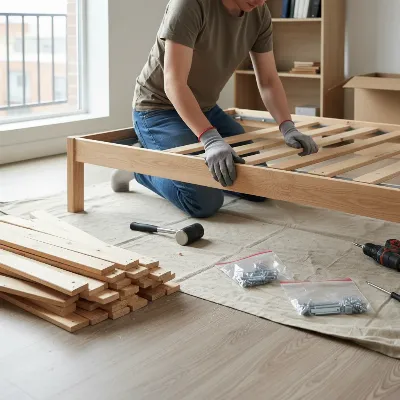 A person carefully removing wooden slats from a bed frame, organizing them into a neat stack. The scene is brightly lit, showing a clean, organized workspace with tools nearby, in a realistic and helpful style.
Step 3: Disconnect Headboard and Footboard
The headboard and footboard are usually the largest and often heaviest components. They are typically attached to the side rails with bolts or screws. Locate these fasteners and use the correct Allen wrench or screwdriver to loosen and remove them. It’s beneficial to have a helper steady these pieces as you remove the hardware, preventing them from falling and causing injury or damage. Immediately place all hardware for the headboard and footboard into separate, clearly labeled plastic bags. Once detached, gently lay them against a wall or padded surface and cover them with moving blankets for protection while you continue.
Step 4: Dismantle Side Rails and Crossbars
With the headboard and footboard detached, you can now focus on the side rails. These connect the headboard and footboard. Unscrew or unbolt them from both ends. Some frames might have metal brackets that slide into place, which may require a gentle tap from a rubber mallet to disengage. As with other components, store all hardware in a labeled bag specific to the side rails. If your bed frame includes any crossbars or additional support beams, disassemble these as well. Carefully set the side rails aside, ensuring they are not in a high-traffic area where they could be tripped over or damaged. For very long side rails, wrapping them in moving blankets secured with tape is a good practice for protection during transport.
Step 5: Organize and Protect Components
Organization is your best friend when disassembling a heavy bed frame. As you remove hardware, place it immediately into separate, labeled plastic bags (e.g., “Headboard Bolts,” “Slat Screws”). You can then tape these bags to their corresponding frame components or keep them together in a designated box for hardware. This meticulous approach will make reassembly significantly easier and prevent the frustrating search for a missing bolt later.
Once all parts are disassembled, protect them for the move. Wrap larger, flat pieces like the headboard, footboard, and side rails in moving blankets, securing the blankets with packing tape. For any fragile or decorative elements, use bubble wrap for an extra layer of protection. Bundle smaller, similar pieces, such as slats, with tape or bungee cords.
Navigating Challenges: Troubleshooting Common Bed Frame Disassembly Issues
While disassembling a bed frame is often straightforward, you might encounter a few common challenges. Knowing how to troubleshoot these issues can prevent frustration and potential damage.
Stuck Bolts and Screws
Old bed frames can have bolts and screws that are rusted or seized in place, making them difficult to loosen. Do not attempt to force them with excessive strength, as this can strip the screw head or damage the bolt. Instead, apply a penetrating lubricant like WD-40 or silicone spray to the stubborn hardware. Allow it to sit for several minutes, giving the lubricant time to work into the threads. A rubber mallet can also help; gently tap the area around the bolt or screw to create vibrations that may loosen the bond. Always use the correct size tool to ensure maximum grip.
Stripped Screw Heads
A stripped screw head is a common pitfall that occurs when the screwdriver slips and grinds away the head’s grooves. To prevent this, always ensure your screwdriver or Allen wrench fits snugly into the fastener. Apply consistent, even pressure directly downwards while turning slowly and deliberately. If you do encounter a stripped screw, a specialized screw extractor tool can often remove it. These tools are designed to bite into the damaged head and turn the fastener out.
Lost Hardware
It’s easy for small screws, bolts, or washers to go missing during a busy move. The best defense against lost hardware is diligent organization from the outset—using labeled bags for each component’s fasteners. However, if a piece does go astray, don’t panic. Most bed frames use standard hardware that can be purchased at a local hardware store. Take a similar piece with you to ensure you get the correct size and type.
Complex or Specialized Frames
Some bed frames present unique challenges. Canopy beds, for instance, require careful disassembly of their vertical posts and top frame before the main frame. Labeling each post according to its position is crucial, as they may not be interchangeable. Storage beds with built-in drawers or hydraulic lift mechanisms might have specific hinges and components that require extra attention and potentially the manufacturer’s instructions. Adjustable bases, often with electronic components and welded frames, can be particularly laborious and may warrant professional assistance due to their complexity and weight. When in doubt about highly specialized designs, consulting the manufacturer’s guide or seeking professional help is a wise decision.
Tips for Safely Moving Disassembled Bed Frame Parts
Once your heavy bed frame is disassembled and organized, moving its individual components still requires careful handling to prevent injury and damage.
Proper Lifting Techniques
Even in pieces, bed frame components can be heavy and awkward. Always prioritize safe lifting practices:
“Bend at your knees, not your back, and lift with your legs. Keep the item close to your body to reduce strain. Good communication with a moving partner is essential for coordinating lifts and avoiding accidents.” – John Davis, Professional Mover
When carrying long pieces like side rails, distribute the weight evenly with a partner. Take small, steady steps, and ensure your path is clear of obstacles.
Protecting Your Home and Furniture
Navigating doorways, hallways, and staircases with large, even disassembled, pieces can still be challenging. Take measurements of tight spaces beforehand. Angle pieces as needed to fit through openings, being mindful of walls and corners to prevent scratches or dents to your home and the furniture itself. For heavier components, furniture sliders can help glide pieces across floors, while a moving dolly can reduce the physical strain of transport.
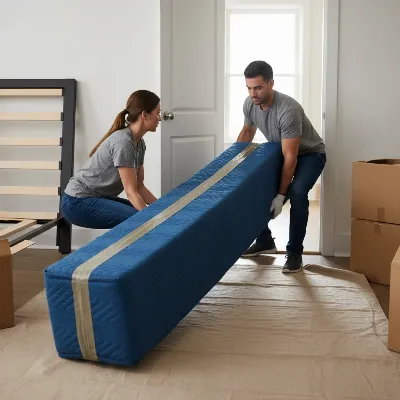 Two people carefully carrying a wrapped bed frame side rail through a doorway, using proper lifting techniques. The scene highlights safety and protection during a move.
Transport and Storage
When loading disassembled bed frame parts into a moving truck or storage unit, arrange them strategically. Place the heaviest, most durable pieces on the bottom. Avoid stacking heavy boxes directly on top of delicate components like headboards, which are surprisingly prone to damage. Secure all items with moving straps to prevent shifting during transit. For long-term storage, ensure pieces are stored in a dry, climate-controlled environment to prevent warping (for wood) or rust (for metal).
Conclusion
Disassembling a heavy bed frame for moving safely is a highly manageable DIY project that offers significant benefits. By systematically preparing your tools, following a step-by-step disassembly guide, and taking precautions against common challenges, you transform a daunting task into an organized, efficient process. You not only protect your valuable furniture from potential damage but also ensure a safer move for yourself and your helpers. With proper organization of hardware and careful handling of components, reassembly in your new space will be smooth and hassle-free. What heavy piece of furniture will you conquer next with your newfound DIY skills?
Frequently Asked Questions
How long does it typically take to disassemble a bed frame?
The time required to disassemble a bed frame can vary based on its complexity and your experience. For a standard frame with all tools readily available, it often takes between 30 minutes to an hour. More intricate designs, or encountering stubborn bolts, might extend the process.
Can all types of bed frames be disassembled?
Most bed frames can be disassembled to some extent. Simple platform beds and metal frames are generally easiest. However, some older, high-quality wooden frames may be glued or doweled, making them difficult or impossible to take apart without damage. Specialized storage beds or adjustable bases also present unique challenges.
What should I do if my bed frame hardware is rusted or stuck?
If you encounter rusted or stuck bolts and screws, apply a penetrating lubricant like WD-40 and let it sit for a few minutes. Gently tapping the area with a rubber mallet can also help loosen the hardware. Always ensure you are using the correct tool size to prevent stripping the screw head.
Is it really necessary to disassemble a bed frame for moving?
While it might seem like extra work, disassembling a bed frame is highly recommended for moving. It prevents damage to the frame itself, makes it significantly easier to maneuver through doorways and hallways, and protects your home from scratches. It also allows for more efficient packing in a moving vehicle.
How can I make sure I don’t lose any screws or bolts during disassembly?
The best method is to use resealable plastic bags for hardware. Immediately after removing screws or bolts from a component (like the headboard or side rails), place them in a separate bag and label it clearly with painter’s tape and a marker. Taping these bags to their corresponding frame parts can further reduce the risk of loss.
Frequently Asked Questions
How long does it typically take to disassemble a bed frame?
Disassembling a standard bed frame usually takes between 30 minutes to an hour, assuming all necessary tools are readily available. More complex designs or issues like stubborn bolts can extend this timeframe.
Can all types of bed frames be disassembled for moving?
Most bed frames can be disassembled, with platform beds and metal frames being the easiest. However, some older wooden frames may be glued or doweled, making disassembly difficult without damage. Specialized storage beds or adjustable bases also present unique challenges.
What should I do if bed frame hardware is rusted or stuck?
If you encounter rusted or stuck bolts, apply a penetrating lubricant like WD-40 and let it sit for several minutes. Gently tapping the area with a rubber mallet can also help loosen the hardware. Always use the correct tool size to prevent stripping the screw head.
Is it necessary to disassemble a bed frame when moving?
Yes, disassembling a bed frame is highly recommended for moving. It prevents damage to the frame, makes it significantly easier to maneuver through tight spaces, protects your home from scratches, and allows for more efficient packing in a moving vehicle.
How can I prevent losing screws and bolts during bed frame disassembly?
The best method to prevent lost hardware is to use resealable plastic bags. Immediately after removing screws or bolts from a component, place them in a separate, clearly labeled bag. Taping these bags to their corresponding frame parts further reduces the risk of loss.
How to Disassemble a Heavy Bed Frame for Moving
This guide provides a step-by-step process for safely disassembling a heavy bed frame, ensuring a smooth and damage-free move.
Strip the bed completely by removing all sheets, blankets, pillows, and mattress protectors. Carefully lift the mattress off the frame, ideally with assistance, as mattresses can weigh 50-150 pounds. Use proper lifting techniques by bending at your knees.
Focus on the bed's support system, which includes wooden or metal slats. Remove loose slats, unscrew screwed-in slats, or roll up slat rolls. Detach any central support legs and store all associated hardware in a labeled plastic bag.
Locate and remove the bolts or screws attaching the headboard and footboard to the side rails. Have a helper steady these large components to prevent falling. Immediately place all hardware into separate, clearly labeled plastic bags.
Unscrew or unbolt the side rails from both ends, connecting the headboard and footboard. Some metal brackets may require a gentle tap with a rubber mallet to disengage. Store all hardware in a labeled bag specific to the side rails and disassemble any additional crossbars.
Place all hardware into separate, labeled plastic bags and tape them to their corresponding frame components. Wrap larger pieces like the headboard, footboard, and side rails in moving blankets. Use bubble wrap for fragile elements and bundle smaller pieces like slats with tape or bungee cords.

This guide was pretty helpful for taking apart my metal frame. I appreciated the emphasis on protecting the furniture from damage during the move. My only minor complaint is that I wish there was a bit more detail on what to do with the smaller hardware, but overall, it got the job done.
I was dreading moving my king-size bed frame, but following these steps made it so much easier. The tip about having the right tools, especially a power drill, was a lifesaver. It really did only take about an hour, which was a huge relief. Highly recommend this guide for anyone moving soon!
The advice on clearing your workspace was good, but I still found it a bit tricky with my platform bed. It took me longer than the 30 minutes to an hour mentioned, probably closer to an hour and a half. Still, it was useful to have a checklist of steps to follow.
I’m not usually good at DIY, but I managed to disassemble my bed frame by myself thanks to these instructions. The methodical approach really helped me stay organized and not get overwhelmed. It saved me from having to pay movers extra to do it, which was a nice bonus.