Waking up to an unwelcome symphony of creaks and groans every time you shift in bed can transform a peaceful night into a restless ordeal. A squeaky bed frame isn’t just an annoyance; it can disrupt your sleep quality, leaving you feeling tired and frustrated. While the persistent noise might lead you to believe a complete overhaul is necessary, many common bed frame squeaks can be quickly and effectively remedied with simple DIY solutions right at home. This comprehensive guide will help you pinpoint the source of the noise and provide step-by-step instructions, ensuring you can restore tranquility to your bedroom and enjoy uninterrupted sleep.
Bed Frame Overview and Common Squeak Origins
Understanding why your bed frame squeaks is the first step toward a lasting solution. Squeaks typically arise from friction as materials rub against each other, often due to loose connections or worn components. Pinpointing the exact source is crucial, as fixes vary depending on the bed frame material and the specific point of contact causing the noise.
Common Causes of a Squeaky Bed Frame
The vast majority of bed frame squeaks can be traced back to a few key culprits:
- Loose Joints and Hardware: Over time, the bolts, screws, and nuts that hold your bed frame together can loosen. This allows components to shift and rub against each other with movement, generating friction and the characteristic squeaking sound. This is arguably the most common cause across all bed frame types.
- Friction Between Materials: Whether it’s wood rubbing on wood in a timber frame, or metal scraping against metal in a steel design, direct contact without proper buffering is a prime source of noise. Wooden slats shifting against the frame or against each other are also frequent offenders.
- Worn or Damaged Components: Continuous use can lead to wear and tear. Wooden parts might warp, metal joints could develop rust, or plastic inserts might degrade, all contributing to instability and noise.
- Uneven Support and Floor Contact: If your bed frame isn’t sitting evenly on the floor, or if one leg is unstable, the uneven weight distribution can cause the entire structure to flex and creak as you move. Sometimes, the floorboards themselves might be squeaking where the bed frame rests.
Types of Bed Frames and Their Squeak Tendencies
Different bed frame materials and designs have unique susceptibilities to squeaks:
- Wooden Bed Frames: These often squeak from wood-on-wood friction, especially at joints where pieces connect without sufficient padding. Loose dowels or slats rubbing against the side rails are common issues. Temperature and humidity changes can also cause wood to expand and contract, leading to new noises.
- Metal Bed Frames: Metal frames are notorious for metal-on-metal friction. Loose bolts allow components to grind together, while poorly fitted connections can produce high-pitched squeaks. Rust buildup in joints can also exacerbate noise.
- Upholstered Bed Frames: While the exterior is soft, the internal structure typically relies on a wooden or metal frame. Therefore, their squeak tendencies mirror those of the underlying material.
- Platform Beds: These frames often feature a slatted base to support the mattress directly. Squeaks here frequently come from the slats themselves: if they are loose, warped, or rubbing against the frame or each other.
Essential Tools for a Squeak-Free Sleep
Before you begin, gather a few basic tools and materials that will make the job easier:
- Screwdrivers and Wrenches: An Allen wrench set, crescent wrench, or a socket wrench set for tightening bolts.
- Lubricants:
- For Metal Frames: WD-40, silicone spray, or a similar non-corrosive oil.
- For Wooden Frames: Beeswax, candle wax, or furniture wax.
- Padding Materials: Felt pads, rubber washers, cork wedges, old socks, fabric scraps, or foam tape.
- Flashlight: To inspect hard-to-reach areas.
- Gloves and Rags: For cleaning and applying lubricants.
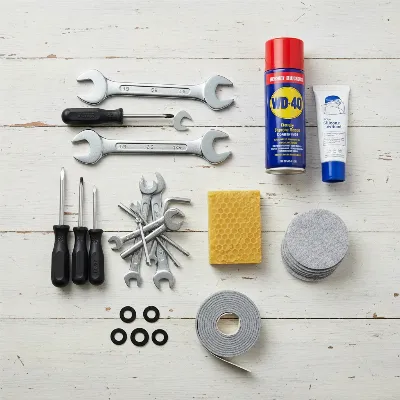 A collection of DIY tools and materials for fixing a squeaky bed frame
Step-by-Step DIY Solutions to Fix a Squeaky Bed Frame
Tackling a squeaky bed frame is a methodical process. By following these steps, you can systematically eliminate the noise and enjoy a quiet night’s rest.
1. Locate the Source of the Squeak
Before you can fix the problem, you need to find exactly where the noise is coming from. This might take a little investigation:
- Remove Bedding and Mattress: First, strip the bed down to the bare frame, removing all sheets, blankets, and pillows. Then, carefully lift the mattress off the frame and lean it against a wall.
- Test the Box Spring (if applicable): If you use a box spring, place it directly on the floor and apply pressure to different areas. If it squeaks, the issue might be internal to the box spring itself, which often requires replacement. If silent, place it back on the frame and test again.
- Test the Bed Frame: With the mattress off (and box spring off or back on, depending on your setup), press down, wiggle, and apply pressure to different parts of the bed frame. Pay close attention to the corners, legs, and where slats meet the rails. Ask a partner to gently move the frame while you listen intently to pinpoint the exact creaking spot.
2. Tighten Loose Hardware
Loose connections are the most frequent cause of squeaks. This step often provides an immediate solution.
- Inspect All Joints: Carefully examine every bolt, screw, and nut connecting the bed frame components.
- Tighten Thoroughly: Using the appropriate wrench or screwdriver, tighten all fasteners. Be firm but avoid over-tightening, which can strip screws or damage the frame.
- Add Washers: For persistent squeaks, especially in metal frames, consider adding nylon or rubber washers between metal components at the joints. These act as a buffer, preventing direct metal-on-metal friction and absorbing vibrations. Plastic washers are preferred over metal ones, as metal washers can introduce new noise.
3. Lubricate Moving Parts
Lubrication reduces friction between components, effectively silencing squeaks. The type of lubricant depends on your bed frame material.
- For Metal Bed Frames: Apply a silicone spray or WD-40 to all metal-on-metal contact points, including inside bolt holes, hinges, and corner brackets. Spray a small amount, then wipe away any excess with a rag to prevent stains. This can quickly eliminate friction and noise.
- For Wooden Bed Frames: Beeswax, candle wax, or furniture wax are ideal for wooden parts. Rub the wax along any areas where wood rubs against wood, such as inside joints, along slat ends, or where frame pieces meet. The wax creates a smooth, frictionless barrier.
4. Add Padding or Buffers
Padding creates a cushion between rubbing surfaces, dampening noise. This is particularly useful for slats and joints.
- Between Slats and Frame: For wooden or metal slatted bases, place felt pads, strips of old T-shirts, socks, or thin fabric between the ends of the slats and the side rails of the frame. This prevents the slats from rubbing directly against the frame when weight is applied. Foam tape can also be applied to the top of the side rails where the slats rest.
- At Joints and Contact Points: If you’ve identified a specific joint that squeaks even after tightening, wedge small pieces of cork, felt, or rubber between the rubbing surfaces. This creates a buffer that absorbs movement and eliminates friction.
- Between Frame and Wall/Floor: If your bed frame rubs against a wall or the floor, place felt pads or furniture glides under the legs or between the frame and the wall. This prevents noise from transferring to the room’s structure.
5. Check and Level Frame Legs
An unstable foundation can cause the entire bed to wobble and squeak.
- Inspect Leg Contact: Ensure all bed frame legs are making firm, even contact with the floor. If the floor is uneven or a leg is slightly shorter, the frame can twist, leading to squeaks.
- Level the Frame: Use furniture pads, shims, or even folded cardboard under shorter legs to level the frame and ensure even weight distribution. Anti-slip pads can also help stabilize the frame on hard floors.
- Tighten Leg Connections: Check that the legs themselves are securely fastened to the bed frame.
6. Address Squeaky Slats
Slats are a common source of noise in many bed frames.
- Reposition or Replace: Ensure all slats are correctly aligned and spaced. If any slats are cracked, warped, or significantly damaged, replacing them might be necessary.
- Secure Slats: For wooden slats that tend to shift, you can secure them using double-sided tape at their ends where they meet the frame, or even small screws if your frame design allows and you prefer a more permanent fix.
- Add Padding: As mentioned in step 4, adding padding between slats and the frame, or even between individual slats if they rub together, can effectively silence them.
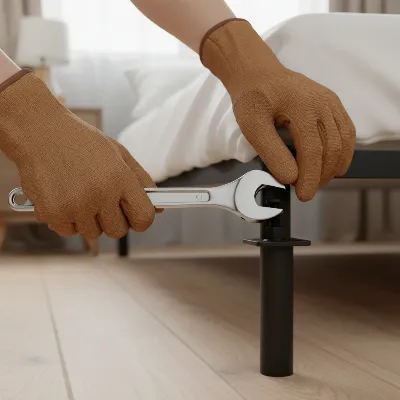 A person using a wrench to tighten bolts on a metal bed frame leg, demonstrating a DIY repair for squeaks.
Preventing Future Squeaks
Once you’ve silenced your bed frame, a little ongoing maintenance can keep it quiet for years to come.
- Regular Checks: Periodically (e.g., every few months), give your bed frame a quick inspection. Check for any loose bolts or signs of wear and tighten or re-lubricate as needed. This proactive approach can prevent minor issues from escalating into major squeaks.
- Proper Assembly: When assembling a new bed frame, apply padding (felt or cork) and a thin layer of wax or lubricant to contact points right from the start. This can mitigate friction before it even becomes an issue. Ensure all hardware is tightened correctly during initial assembly.
- Avoid Overloading: Be mindful of the weight capacity of your bed frame. Excessive weight can strain joints and components, accelerating wear and increasing the likelihood of squeaks.
When to Consider a New Bed Frame
While most squeaks are fixable, sometimes a bed frame is beyond repair. If your frame is severely warped, has broken components that cannot be replaced, or is simply very old and made of low-quality materials, replacing it might be the most effective long-term solution for a truly peaceful night’s sleep.
Conclusion
A squeaky bed frame can be a significant impediment to restful sleep, but it doesn’t have to be a permanent fixture in your bedroom. By methodically identifying the source of the noise and applying these straightforward DIY fixes—from tightening loose hardware and lubricating friction points to strategically adding padding—you can effectively silence your bed frame. Regular maintenance and a proactive approach will ensure your bed remains a sanctuary of quiet comfort, allowing you to drift off to sleep undisturbed. So, why not reclaim your peaceful nights and give these tips a try? You might be surprised at how quickly you can achieve a squeak-free slumber.
Frequently Asked Questions
Why does my bed frame squeak even after tightening all the bolts?
Even after tightening, minor movements can still cause friction. Consider adding rubber or nylon washers to metal joints, or felt pads/beeswax to wooden connections to create a buffer and reduce rubbing. Also, check if the slats are rubbing or if the bed frame legs are uneven.
What is the best lubricant for a metal bed frame to stop squeaking?
For metal bed frames, silicone spray or WD-40 are highly effective. Silicone spray is often preferred as it’s less likely to attract dust and provides longer-lasting lubrication. Apply sparingly to metal-on-metal contact points and wipe away excess.
Can a mattress or box spring cause a squeak, not just the bed frame?
Yes, a squeaky mattress (especially older innerspring types) or an aging box spring can often be the source of noise. To rule them out, remove them from the bed frame and test them separately on the floor. If they squeak, the issue lies with them, not the frame.
How can I stop wooden slats from squeaking on my bed frame?
To stop wooden slats from squeaking, try placing felt pads, thin fabric strips, old socks, or foam tape between the ends of the slats and the bed frame rails. This cushioning reduces direct wood-on-wood friction as you move.
What should I use if my bed frame legs are uneven on the floor?
If your Bed Frame legs are uneven, use furniture pads, shims, or even folded cardboard under the shorter legs to level the frame. This ensures even weight distribution and prevents the frame from twisting or rocking, which can cause squeaks.