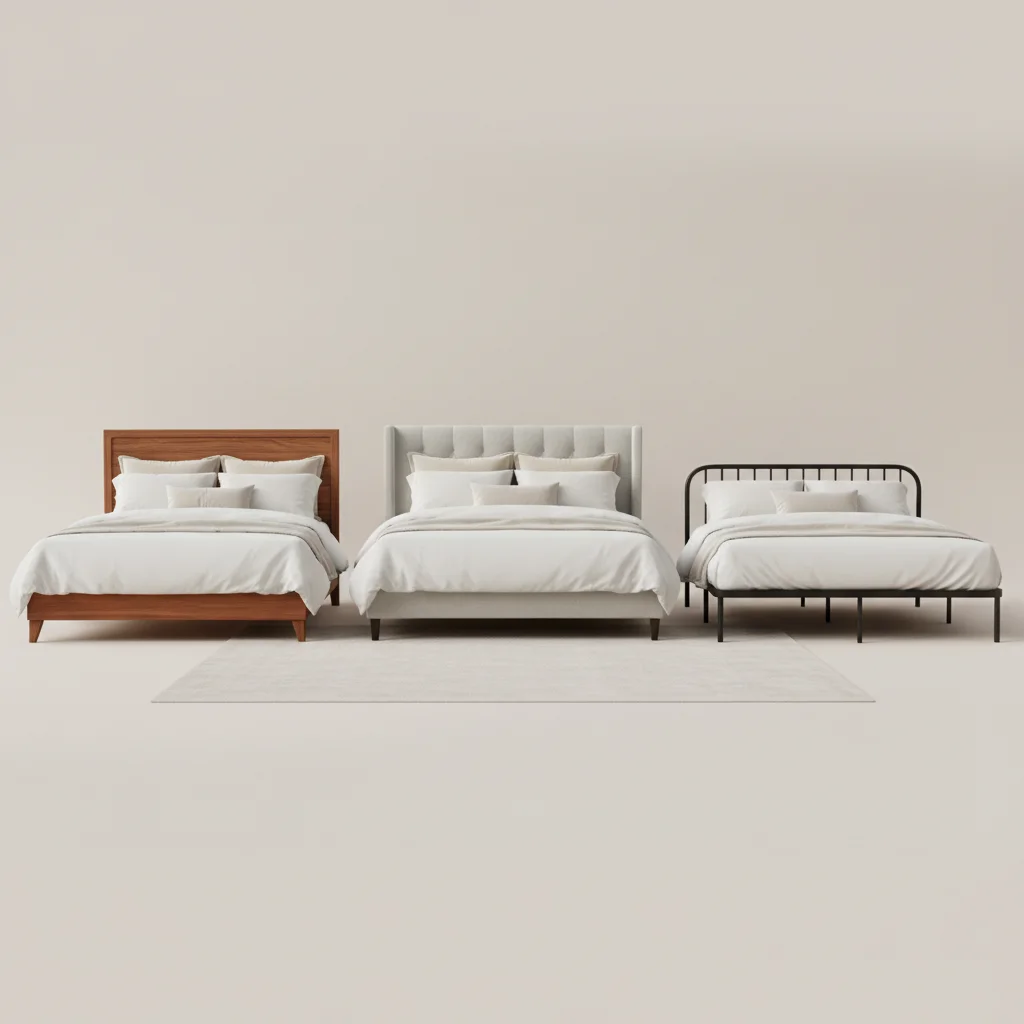
Choosing the right bed frame size for couples is crucial for comfort and sleep quality. The best bed frame sizes for couples typically include Queen, King, and California King, each offering distinct advantages in terms of space and room fit. Selecting the ideal size depends on factors like bedroom dimensions, individual sleeping preferences, and whether children or pets will share the bed.
Queen Bed Frames: The Popular Choice
Queen bed frames are the most popular choice for couples, measuring 60 inches wide by 80 inches long. This size provides ample space for two adults to sleep comfortably without feeling cramped, making it suitable for most standard bedrooms. It’s a versatile option that balances space efficiency with comfort, often fitting well in rooms that are at least 10 by 10 feet. Queen beds are also a more budget-friendly option compared to larger sizes, both for the frame itself and accompanying mattresses and bedding. For more bed frames guides on this site.
King Bed Frames: Maximizing Personal Space
For couples who prioritize maximum personal sleeping space, King bed frames are an excellent option. A standard King bed measures 76 inches wide by 80 inches long, offering each person the equivalent of a Twin XL bed. This generous width is ideal for couples who toss and turn, have different sleep schedules, or frequently share their bed with children or pets. A King bed frame requires a larger bedroom, ideally at least 12 by 12 feet, to ensure adequate walking space around the bed.
California King Bed Frames: The Length Advantage
|
Our Picks for the Best Bed Frame in 2026
As an Amazon Associate I earn from qualifying purchases.
|
||
| Num | Product | Action |
|---|---|---|
| 1 | Zinus Rumi 14in Full Metal Bed Frame, Quick Assembly SmartBase® Mattress Foundation, Heavy Duty Sturdy Steel with No Box Spring Needed, Eco-Friendly Packaging, Black |

|
| 2 | Full Bed Frame with Classic Headboard,Strong Metal Slats Support,Under Bed Storage Space,No Box Spring Needed,Easy to Assemble,Black |
|
| 3 | 12 inches Full Size Bed Frame with Minimalist headboard,Metal Platform Base with Strong Metal Slats,Mattress Foundation for Under Bed Storage,Easy Assembly,Black |
|
| 4 | Full Size Bed Frame with Modern Headboard, Metal Platform Bed Base with Strong Support, No Box Spring Needed, Easy Assembly, Noise Free,Black |
|
| 5 | Hafenpo 18 Inch Full Bed Frame - Sturdy Metal Platform Full Size, No Box Spring Needed, Heavy Duty, Easy Assembly, Strong Bearing Capacity, Under Bed Storage, Black |
|
| 6 | Queen Bed Frame-Classic Metal Platform Bed Frame,Mattress Foundation with Steel Slat Support,Under Foundation Storage,No Box Spring Needed, Easy Assembly, Queen Size |
|
| 7 | Vengarus Metal Bed Frame,Full Size Bed Frame with Headboard,Structurally Stable, Heavy Duty Steel Slat Supported,Under Bed Storage,No Box Spring Needed,14 Inch,Black |
|
| 8 | Zinus Rumi 14in Queen Metal Bed Frame, Quick Assembly SmartBase® Mattress Foundation, Heavy Duty Sturdy Steel with No Box Spring Needed, Eco-Friendly Packaging, Black |
|
| 9 | Metal Platform Bed Frame 14 Inch Tall,No Box Spring Needed,Twin Size Bed with Heavy Duty Strong Support Slats,Easy to Assemble,Black |
|
| 10 | Metal Bed Frame,Twin Size Bed Frame with Storage Space,Heavy Duty Sturdy Mattress Foundation,Easy Assembly,No Box Spring Needed, Black,14 Inch,Twin |
|
California King bed frames, measuring 72 inches wide by 84 inches long, are specifically designed for taller individuals. While slightly narrower than a standard King, the extra four inches in length can make a significant difference for anyone over six feet tall, preventing feet from dangling off the end of the bed. This size is particularly beneficial for couples where one or both partners are tall. Like the standard King, a California King requires a spacious bedroom to accommodate its dimensions comfortably. It’s important to note that bedding for California King beds can sometimes be less readily available than for Queen or standard King sizes.
Considerations for Room Size and Layout
When deciding on a bed frame size, always measure your bedroom carefully. Beyond the bed frame itself, consider space for nightstands, dressers, and walking paths. A crowded bedroom can feel uncomfortable and hinder movement. For smaller rooms, a Queen might be the largest feasible option, while larger master bedrooms can easily accommodate King or California King sizes. Think about the overall flow and functionality of your bedroom.
Sleeping Habits and Future Needs
Your sleeping habits as a couple should also influence your decision. Do you prefer to cuddle, or do you need your own distinct space? Do you anticipate children or pets joining you in bed regularly? These factors can push you towards a larger size. Also, consider future needs; a bed frame is a significant investment, and choosing a size that will serve you well for years to come is wise.
- Measure your bedroom: Ensure adequate space for the bed and other furniture.
- Assess sleeping preferences: Determine if more personal space is needed.
- Consider height: Taller individuals may benefit from a California King.
- Factor in pets/children: Extra width can be crucial for co-sleeping.
- Budget for bedding: Larger beds often mean higher costs for sheets and duvets.
