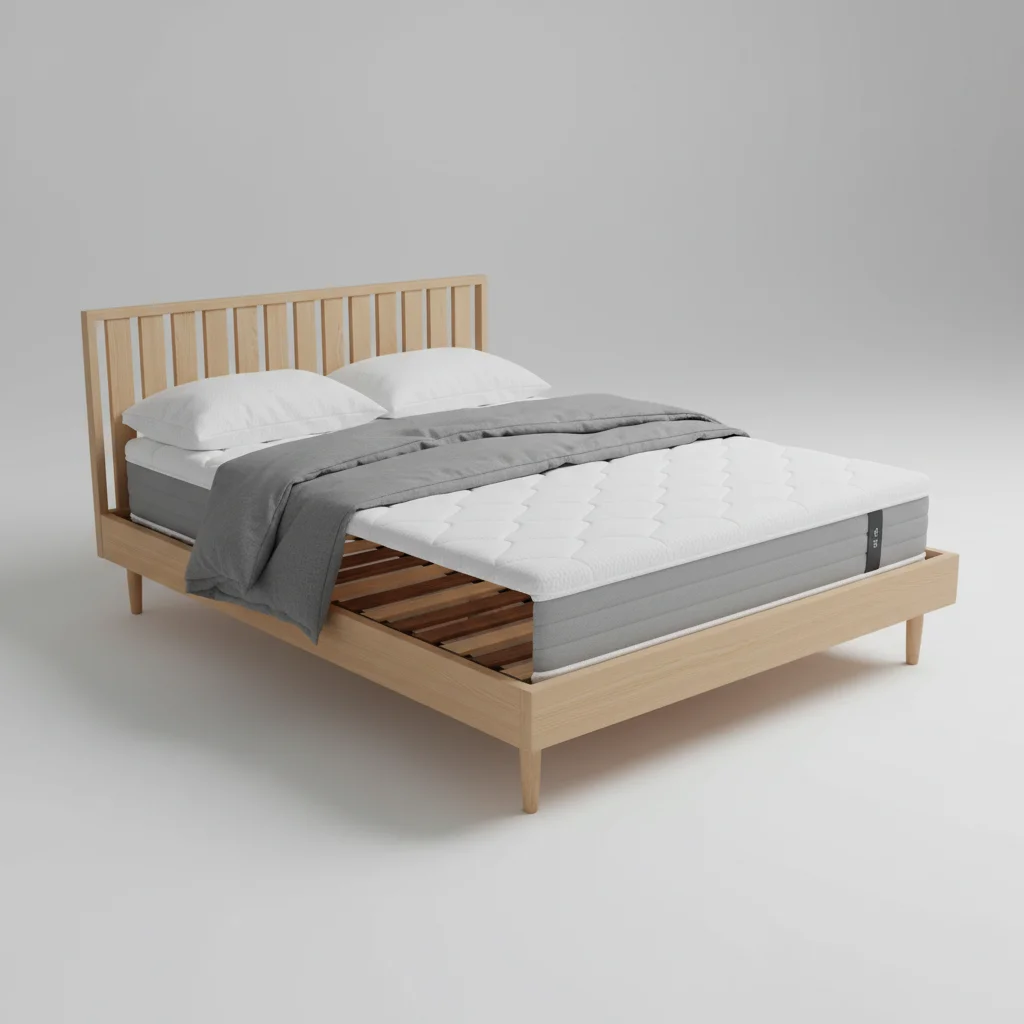
Wood slat bed frames offer a robust and breathable foundation for your mattress, often proving superior in support and longevity compared to solid platforms or traditional box springs. The spaced slats allow for crucial air circulation, preventing moisture buildup and extending mattress life. This design also provides a firm yet slightly yielding surface that can enhance the feel of many modern mattresses, particularly memory foam and hybrid types.
Understanding Wood Slat Construction and Benefits
Wood slat bed frames are characterized by a series of wooden planks, typically made from pine, spruce, or poplar, that span the width of the bed frame. These slats are either fixed, meaning they are screwed or bolted into the frame, or removable, often held in place by side rails. The spacing between slats is critical; for most mattresses, a gap of no more than 2-3 inches is recommended to provide adequate support and prevent sagging. Wider gaps can lead to mattress indentation and premature wear.
One of the primary benefits of wood slats is their ability to promote airflow. This ventilation is essential for dissipating heat and moisture that can accumulate in a mattress, creating an environment less conducive to mold, mildew, and dust mites. This natural breathability contributes significantly to the overall hygiene and lifespan of your mattress.
Types of Wood Slats and Their Impact
There are generally two main types of wood slats: rigid and bowed (or sprung). Rigid slats are flat and provide a consistently firm surface. They are excellent for mattresses that require a very stable, unyielding base, such as traditional innerspring or very firm foam mattresses. Bowed slats, on the other hand, have a slight upward curve. When weight is applied, they flatten out, offering a subtle spring-like effect that can enhance the comfort and responsiveness of certain mattresses, particularly those designed for pressure relief.
- Pine Slats: Common, affordable, and offer good support for most mattresses.
- Poplar Slats: Slightly more durable than pine, with good flexibility.
- Beech Slats: Often used in higher-end bowed slat systems for their strength and resilience.
- Laminated Slats: Multiple layers of wood glued together for enhanced strength and flexibility.
- Solid Wood Slats: Single pieces of timber, known for their robustness and longevity.
Installation and Maintenance Considerations
|
Our Picks for the Best Bed Frame in 2026
As an Amazon Associate I earn from qualifying purchases.
|
||
| Num | Product | Action |
|---|---|---|
| 1 | Zinus Rumi 14in Queen Metal Bed Frame, Quick Assembly SmartBase® Mattress Foundation, Heavy Duty Sturdy Steel with No Box Spring Needed, Eco-Friendly Packaging, Black |

|
| 2 | Zinus Rumi 14in Full Metal Bed Frame, Quick Assembly SmartBase® Mattress Foundation, Heavy Duty Sturdy Steel with No Box Spring Needed, Eco-Friendly Packaging, Black |
|
| 3 | Vengarus Metal Bed Frame,Full Size Bed Frame with Headboard,Structurally Stable, Heavy Duty Steel Slat Supported,Under Bed Storage,No Box Spring Needed,14 Inch,Black |
|
| 4 | Queen Bed Frame-Classic Metal Platform Bed Frame,Mattress Foundation with Steel Slat Support,Under Foundation Storage,No Box Spring Needed, Easy Assembly, Queen Size |
|
| 5 | Metal Bed Frame,Twin Size Bed Frame with Storage Space,Heavy Duty Sturdy Mattress Foundation,Easy Assembly,No Box Spring Needed, Black,14 Inch,Twin |
|
| 6 | Metal Platform Bed Frame 14 Inch Tall,No Box Spring Needed,Twin Size Bed with Heavy Duty Strong Support Slats,Easy to Assemble,Black |
|
| 7 | 12 inches Full Size Bed Frame with Minimalist headboard,Metal Platform Base with Strong Metal Slats,Mattress Foundation for Under Bed Storage,Easy Assembly,Black |
|
| 8 | Full Bed Frame with Classic Headboard,Strong Metal Slats Support,Under Bed Storage Space,No Box Spring Needed,Easy to Assemble,Black |
|
| 9 | Full Size Bed Frame with Modern Headboard, Metal Platform Bed Base with Strong Support, No Box Spring Needed, Easy Assembly, Noise Free,Black |
|
| 10 | Hafenpo 18 Inch Full Bed Frame - Sturdy Metal Platform Full Size, No Box Spring Needed, Heavy Duty, Easy Assembly, Strong Bearing Capacity, Under Bed Storage, Black |
|
Proper installation is key to maximizing the benefits of a wood slat bed frame. Ensure that all slats are evenly spaced and securely fastened to prevent shifting or squeaking. Many modern slat systems come with pre-drilled holes and connecting straps to simplify this process. Regular inspection of the slats for any signs of cracking or warping is also advisable. If a slat becomes damaged, it’s important to replace it promptly to maintain uniform support for your mattress.
For optimal performance, consider a wood slat bed frame with a center support beam, especially for queen and king-sized beds. This additional support prevents the slats from bowing in the middle over time, ensuring consistent mattress support across the entire sleeping surface.
Comparing Wood Slats to Other Foundations
When compared to solid platform foundations, wood slats offer superior breathability. Solid platforms, while providing a very firm base, can trap heat and moisture, potentially shortening a mattress’s lifespan. Against traditional box springs, wood slats often provide a more contemporary and minimalist aesthetic, and many modern mattresses are designed to perform best on a firm, non-yielding slatted base rather than a spring-based box spring. The direct support from slats can also prevent the ‘hammocking’ effect sometimes associated with older box springs.
Choosing the Right Wood Slat Frame
When selecting a wood slat bed frame, consider the type of mattress you own or plan to purchase. Memory foam and latex mattresses generally benefit from closer slat spacing (2-3 inches) to prevent sagging. Innerspring mattresses can tolerate slightly wider spacing (up to 4 inches), but closer is always better for longevity. Always check the manufacturer’s recommendations for your specific mattress. The quality of the wood and the overall construction of the frame will also dictate its durability and stability.
